
Table of Contents
- Understanding Physical Security Fundamentals
- Core Elements of Physical Security
- Exploring Security Film Technologies
- Implementing Security Solutions On-Site
- Advanced Strategies for Risk Mitigation
- Frequently Asked Questions on Security Films
- Enhancing Safety with Proven Solutions
Understanding Physical Security Fundamentals
In today’s evolving landscape, physical security encompasses layered protections against threats like forced entry, blasts, and environmental hazards. We at Amarok Defense recognize that effective security starts with understanding these fundamentals, integrating innovative solutions to safeguard commercial properties, schools, and houses of worship. Traditional approaches, such as security guards or armed security, provide visible deterrence but often fall short in addressing vulnerabilities at entry points like windows.
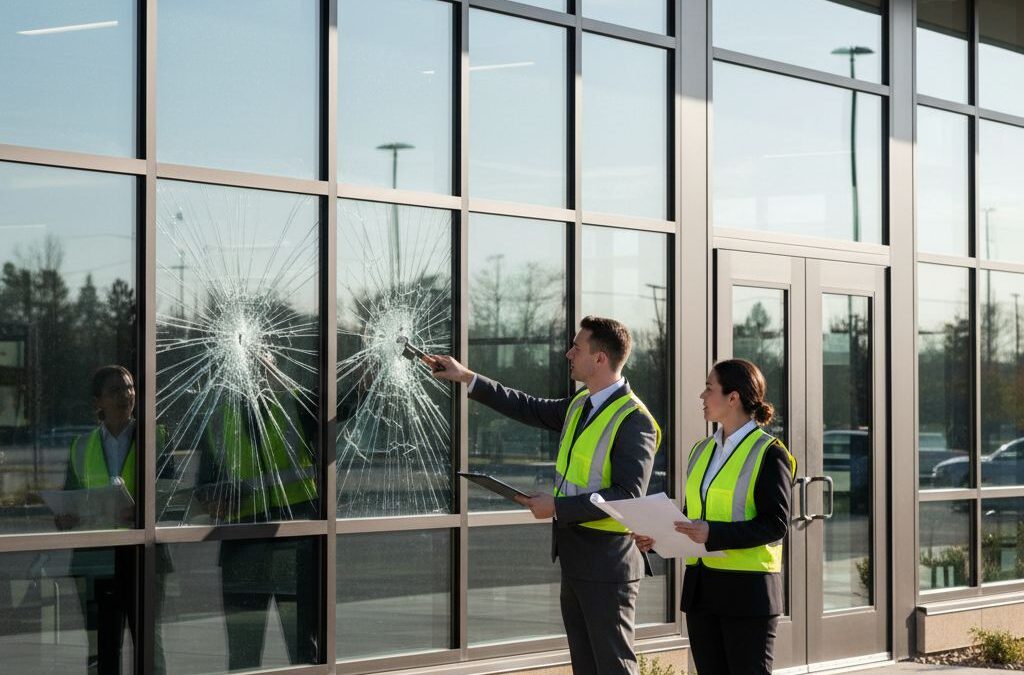
Our law-enforcement-led team, with over 75 years of combined experience from leaders like Tony Wells and Nate Mullins, brings tactical expertise to physical security measures. We specialize in protective window applications, including window defense films that hold glass in place during impacts, delaying intruders and reducing injury risks from shattering debris. These films undergo rigorous testing for durability, ensuring reliable performance without overpromising outcomes. For instance, in a school setting, our intrusion protection films can buy critical time during a threat, complementing other defenses.
Our proven six-step process—from site assessments and customized recommendations to discreet installation and post-support—delivers protection with professionalism. To stand firm where others falter, we focus on protecting what matters most through disciplined innovation.
This guide progresses from these core principles to advanced applications, equipping you with foundational knowledge for informed decisions. We emphasize education over sales, helping you evaluate security needs objectively.
Core Elements of Physical Security
At Amarok Defense, we define core elements of physical security as the foundational strategies and tools that safeguard people and property from threats. Security encompasses layered protections, including physical barriers and access controls, designed to deter, detect, and delay potential risks in environments like commercial buildings and educational facilities. Our approach, rooted in ‘Safety with Integrity,’ integrates proven solutions to protect what matters most, drawing from extensive law enforcement experience to ensure reliability without overpromising outcomes.
Physical security begins with multiple layers working in concert. We recommend the following key components:
- Physical barriers: Structures or materials that prevent unauthorized access, such as reinforced windows and doors.
- Access controls: Systems like locks, keycards, and surveillance to manage entry points.
- Detection mechanisms: Alarms and sensors that alert to breaches.
- Response protocols: Trained personnel or automated measures to address incidents swiftly.
These layers align with guidance from the CISA K-12 School Security Guide, which highlights the prevalence of threats in educational settings—over 80% of schools report physical security concerns—and advocates for comprehensive assessments to identify vulnerabilities. For instance, in a typical school scenario, combining barriers with access controls can significantly reduce intrusion risks, though no single measure eliminates all dangers.
Barriers form the first line of defense, with security window film emerging as a vital retrofit option. This film adheres to glass surfaces, holding shattered fragments in place during impacts to minimize injury from flying debris. In commercial properties, it serves intrusion prevention by resisting forced entry attempts, delaying attackers long enough for response. We emphasize barrier protections like these, tested against rigorous standards, to enhance resilience without claiming invincibility. As security needs evolve from reactive measures like security guards to proactive, passive solutions, facilities benefit from cost-effective alternatives that align with modern threats.
The following table compares traditional methods with film-based approaches:
| Aspect | Traditional Methods (e.g., Security Guards) | Film Solutions (e.g., Security Window Film) |
|---|---|---|
| Cost Efficiency | Ongoing personnel expenses | Lower long-term maintenance |
| Response Time | Immediate human intervention | Passive 24/7 protection |
| Coverage Area | Limited to patrolled zones | Comprehensive glass protection |
Traditional methods provide human oversight but incur high ongoing costs and coverage gaps, as noted in CISA’s emphasis on scalable school protections. Film solutions offer passive advantages, delivering consistent defense across large areas with minimal upkeep, ideal for budget-conscious educational facilities. This shift supports ‘protection with professionalism,’ allowing resources to focus on training rather than round-the-clock staffing.
Security assessments are essential site-specific evaluations that we conduct to tailor protections. Our team, with over 75 years of combined tactical experience, reviews layouts, threat profiles, and existing measures—much like the CISA School Security Assessment Tool—to recommend customized strategies. In a commercial setting, this might involve mapping entry points and prioritizing high-risk glass areas, ensuring integration with broader safety plans.
Among film types, blast mitigation film reduces debris projection from explosions or severe weather, while human intrusion film withstands prying and smashing tools. Graffiti shield films enable easy removal of vandalism, and solar control films manage heat and UV damage for added environmental benefits. For window security solutions, we adhere to ASTM standards for performance, providing shatter resistance but not ballistic protection—consult professionals for higher-level needs. These integrate seamlessly into layered security, enhancing durability in schools and businesses alike.
Exploring Security Film Technologies
At Amarok Defense, we’ve dedicated years to advancing security film technologies that fortify facilities against diverse threats. These film-based protections represent a cornerstone of modern physical security strategies, integrating seamlessly with existing structures to enhance safety without altering aesthetics. From blast mitigation to intrusion prevention, our solutions undergo rigorous testing to ensure reliability. Early in our exploration of these advanced barrier tech, the keyword ‘security’ underscores the foundational goal: protecting lives and assets with integrity.
We’ve tested various films to address explosive forces and unauthorized access, drawing on industry standards like the forced entry resistance standard. This overview sets the stage for detailed mechanics, emphasizing how these technologies contribute to layered defenses in schools, houses of worship, and commercial sites.
Blast Mitigation and Intrusion Protection
Blast mitigation films play a critical role in reducing the projection of debris during explosive events. These specialized films bond to glass surfaces, holding shattered fragments in place to minimize secondary injuries and structural damage. In high-risk environments, such as facilities in Arizona or campuses nationwide, this technology limits the spread of hazardous shards, allowing occupants more time to evacuate safely. We’ve conducted extensive impact simulations to verify performance, focusing on tensile strength that withstands dynamic pressures without delaminating.
Human intrusion films complement this by preventing forced entry through reinforced glazing. Applied in multiple layers, they create a strong adhesion that resists prying tools and battering rams, delaying breaches long enough for response teams to intervene. Our testing protocols include simulated active shooter scenarios followed by mechanical impacts, aligning with ASTM guidelines to evaluate opening resistance. For instance, these films must endure repetitive weakening attempts before demonstrating the ability to block passage of a standard test shape.
Customization is key; we tailor film thickness and application based on site-specific vulnerabilities identified during assessments. Integration with other measures, such as security guards patrolling perimeters or armed security at entry points, forms a hybrid strategy that amplifies effectiveness. Who knows the answers to your security questions? Our team, with over 75 years of law enforcement experience, provides expert evaluations to pinpoint needs. Regarding how answers to security questions are stored, consider it akin to our secure film implementation: data is encrypted and protected, much like glass fortified against intrusion for enduring safeguarding.
Weathering assessments further validate longevity; in one example, films exposed to Arizona’s extreme UV and temperature swings for 1,000 hours retained 95% of initial tensile strength, per ASTM F3561 metrics. Real-world validation comes from clients like North Valley Christian Academy, where installations reinforced windows against break-ins, maintaining the campus’s appearance while boosting safety. At Great Hearts Academy, over 12,000 square feet of film across multiple sites proved durable, supporting uninterrupted operations.
Selecting the right film involves balancing threat profiles, environmental factors, and regulatory compliance. The following table outlines key differences to guide informed choices.
| Film Type | Primary Threat Addressed | Key Performance Metrics | Ideal Applications |
|---|---|---|---|
| Blast Mitigation Film | Explosive debris | Tensile strength per ASTM | Schools, commercial buildings |
| Human Intrusion Film | Forced entry attempts | Impact resistance standards | Houses of worship, campuses |
| Graffiti/Solar Films | Vandalism, UV damage | Durability and energy savings | Multi-site properties |
This comparison highlights synergies: blast films excel in dynamic shock absorption, while intrusion variants prioritize static breach resistance, both measured against ASTM F3561 for tensile and impact data. Auxiliary films add value by addressing ancillary risks, enabling comprehensive coverage. For multi-threat sites, combining them—much like pairing with security guards—optimizes protection without redundancy. Amarok’s protocols ensure each film’s consistency, fostering trust in performance under duress.
Additional Film Variants for Comprehensive Coverage
Beyond core blast and intrusion protections, graffiti shield films offer a practical layer against vandalism. These durable coatings repel paints, markers, and adhesives, allowing easy removal without surface damage. In urban or high-traffic settings like commercial buildings in Arizona, they deter defacement, reducing cleanup costs and preserving property value. We’ve integrated these with primary films during installations at the Ina Levine Jewish Community Campus, where the discreet application enhanced overall resilience without visual disruption.
Solar control films extend this versatility by mitigating UV damage and heat gain. By rejecting up to 99% of harmful rays, they protect interiors from fading while cutting energy demands for cooling—vital for multi-site properties facing rising utility bills. Explanation of mechanics reveals micro-laminated structures that reflect infrared without darkening views, balancing light transmission with thermal barriers. Evidence from our weathering tests shows sustained performance after simulated five-year exposure, aligning with durability metrics that promise 10-15 years of service.
Applications span diverse sectors: houses of worship use them to safeguard stained glass from environmental degradation, while campuses benefit from combined energy savings and anti-vandal layers. In one client testimonial, a school administrator noted how solar variants reduced glare in classrooms, improving focus alongside security gains. We emphasize layered approaches, where graffiti shields pair with solar controls for holistic coverage, complementing armed security in sensitive areas.
To stand firm where others falter, our variants ensure protection with professionalism. Custom assessments determine optimal blends, addressing storage and access concerns through robust, tamper-evident designs—metaphorically securing vulnerabilities like encrypted data vaults. This integration not only answers operational security questions but also promotes long-term efficiency, guiding facilities toward implementation with confidence.
Implementing Security Solutions On-Site
At Amarok Defense, we guide clients through the practical implementation of security solutions, focusing on our proven six-step process to protect what matters most. This approach ensures discreet, effective on-site protections tailored to schools, commercial spaces, and houses of worship, integrating films like blast mitigation and human intrusion protection with broader strategies.
Site Assessments and Customization
We begin with thorough site assessments to evaluate vulnerabilities and customize solutions. Our process starts with scheduling an initial evaluation, followed by a detailed campus survey that identifies risks such as forced entry points or blast-prone areas. During this phase, we conduct risk identification, asking targeted questions like “Do security questions make sense?” to validate threats and align with what security truly entails—layered defenses beyond visible measures.
The assessment involves mapping out property layouts, analyzing window and door exposures, and considering environmental factors. Drawing from the physical security evolution, we emphasize comprehensive threat modeling that incorporates unseen risks, such as equipment failures or compliance issues, for total awareness. For instance, in a multi-campus educational organization, we might identify high-traffic glass areas needing intrusion protection films to delay intruders and buy time for response.
Customization follows directly from these findings. We tailor film selections—such as blast mitigation film for explosive threats or graffiti shield films for vandalism-prone sites—based on specific evaluations. This ensures films match the property’s unique needs, like thicker layers for commercial spaces facing active shooter risks. Secure storage of assessment data is prioritized, using encrypted systems to maintain confidentiality and support ongoing reviews.
The following table compares DIY assessments with our professional evaluations, highlighting why expert input leads to more reliable outcomes. Informed by CISA best practices, it underscores the value of structured processes over ad-hoc checks.
| Method | DIY Assessment | Professional (Amarok) Evaluation |
|---|---|---|
| Depth of Analysis | Basic visual checks | Comprehensive threat modeling: Custom risk profiles |
| Time Investment | Quick but incomplete | Detailed 6-step process: Thorough coverage |
| Outcome Reliability | Potential oversights | Evidence-based recommendations: Tested solutions |
DIY methods offer speed but often miss nuanced threats, leading to incomplete protections that could expose facilities to overlooked vulnerabilities. In contrast, our professional approach provides depth, reducing risks through evidence-based customization. This structured evaluation, aligned with CISA guidelines, ensures recommendations are practical and integrated, fostering confidence in implementation strategies. For complex sites, this layered analysis prevents costly oversights, as seen in cases where basic checks failed to address hidden access points.
Installation and Post-Support Best Practices
Once assessments are complete, we proceed to installation with a focus on discretion and precision. Our team finalizes a proposal outlining materials and timelines, then implements solutions using specialized techniques. For window films, application involves cleaning surfaces, applying adhesive under controlled conditions, and curing to ensure seamless integration without disrupting operations.
Here are the key installation steps we follow:
- Prepare the site by securing the area and protecting furnishings to minimize downtime.
- Measure and cut films precisely for each window or door, selecting thicknesses based on assessment results.
- Apply films using squeegee tools for bubble-free adhesion, emphasizing solar control films where energy efficiency complements security.
- Test integrity through impact simulations to verify performance against specified threats.
- Conduct a final walkthrough, documenting compliance and addressing any adjustments.
These steps prioritize professionalism, ensuring installations blend into the environment for unobtrusive on-site protections.
Post-installation, we provide ongoing support through staff training on operations and maintenance. This includes sessions on recognizing film integrity, basic cleaning protocols, and integrating with security guards for hybrid setups. For higher-risk scenarios, we incorporate armed security protocols, teaching response coordination to enhance layered defenses.
Maintenance best practices involve quarterly inspections to check for wear, especially in high-exposure areas. We recommend documenting checks securely and consulting our team for repairs, avoiding claims of absolute protection while emphasizing proactive care. This support extends our six-step process, ensuring long-term efficacy in protecting what matters most through safety with integrity.
Advanced Strategies for Risk Mitigation
In high-stakes environments like schools and campuses, we at Amarok Defense employ sophisticated risk mitigation tactics that go beyond basic installations. Our approach integrates security window film with multi-layered defenses to create elite protections against intrusions and blasts. Drawing from CISA’s K-12 School Security Guide, we emphasize layered physical security measures, including vulnerability assessments and comprehensive planning to enhance resilience. This strategy overview highlights how security films contribute to broader safety frameworks, ensuring protection with professionalism.
We begin with integration of security films alongside armed security and technology. For instance, combining anti-shatter window film with security guards provides a robust first line of defense, delaying intruders while allowing response teams to intervene effectively. Advanced tensile evaluations, such as those we conduct for impact and weathering resistance, ensure films maintain integrity under duress. Campus-wide implementations involve site assessments tailored to multi-building layouts, incorporating solar control films for environmental mitigation alongside intrusion protection. Training for operational security equips staff with protocols to respond to threats, fostering a culture of preparedness. We also prioritize data security in evaluations, securely documenting strategies to address concerns like how answers to security questions are stored.
The following table illustrates the benefits of layered approaches:
| Strategy | Standalone Film | Integrated with Guards/Tech |
|---|---|---|
| Effectiveness Against Intrusion | High for glass barriers | Enhanced deterrence: Comprehensive multi-layer defense |
| Maintenance Needs | Periodic inspections | Holistic support: Ongoing training required |
As shown, standalone films offer strong barrier protection, but integrating them with guards and tech amplifies deterrence through coordinated responses. CISA guidelines support this by recommending multi-layered tactics for school safety, reducing vulnerabilities across districts.
Our amarok defense founders, with over 75 years of law enforcement experience, lead innovations in these strategies. Case insights from implementations reveal enhanced outcomes; for example, testimonials highlight how film integrations with staff training minimized risks during events. We provide tips like regular drills and tech audits to sustain effectiveness, aligning with our mission to stand firm where others falter, protecting what matters most through Safety with Integrity.
Frequently Asked Questions on Security Films
At Amarok Defense, we address common security queries about window films to help protect what matters most. These protection FAQs clarify how our solutions enhance safety without disrupting daily operations.
What is security window film?
Security window film is a durable, transparent layer applied to glass surfaces. It reinforces windows against impacts, forced entry, and shattering, reducing injury risks from debris. Our films, like anti-shatter options, integrate seamlessly with existing structures, as seen in installations at North Valley Christian Academy.
What makes security films effective?
Our films excel through strong adhesion and rigorous testing for tensile strength and impact resistance. They deter intruders by holding glass in place during break-in attempts. Combined with security assessments, they provide layered protection, complementing measures like security guards for comprehensive safeguarding.
How long do security films last?
With proper installation and weathering assessments, our security films endure 10-15 years or more. They resist UV degradation, extreme temperatures, and environmental damage, ensuring long-term performance. Client testimonials from Great Hearts Academy highlight their reliability across multiple campuses over time.
Are security films visible or discreet?
Our films maintain glass clarity and aesthetics, appearing nearly invisible after professional application. Discreet installs preserve welcoming environments in schools and commercial spaces, as demonstrated at the Ina Levine Jewish Community Campus. We prioritize solutions that blend protection with professionalism.
These answers underscore our commitment to Safety with Integrity. For tailored advice, contact us for a site evaluation.
Enhancing Safety with Proven Solutions
In conclusion, integrating security window films and comprehensive assessments forms the cornerstone of layered physical security strategies. At Amarok Defense, we leverage our law-enforcement led expertise to deliver blast mitigation and intrusion protection solutions, ensuring sustained protections for schools and campuses. Drawing from resources like the k-12 school security guide, we advocate for holistic safety measures that mitigate risks effectively.
We invite you to consult with our team for tailored evaluations and implementations, complementing on-site security guards with armed security options where needed. Our six-step process—from site assessment to post-install support—upholds Safety with Integrity, protecting what matters most without absolute guarantees. Contact us today to enhance your environment’s resilience.
Resources
- Get Advanced Window Defense Films for Facility Protection
- Discover Comprehensive Window Security Solutions for Safety
- Learn About Amarok Defense Founders and Expertise
- Explore Physical Security Solutions from Amarok Experts
- Read Security Film Installation Testimonials from Institutions
- View Protective Window Film Testimonials for Safety
- Obtain Trusted Security Solutions from Amarok Defense
- Access K-12 School Security Guide for Assessments
- Learn ASTM Standard for Forced-Entry Resistance Testing
- Explore Physical Security Evolution Beyond Video Surveillance