
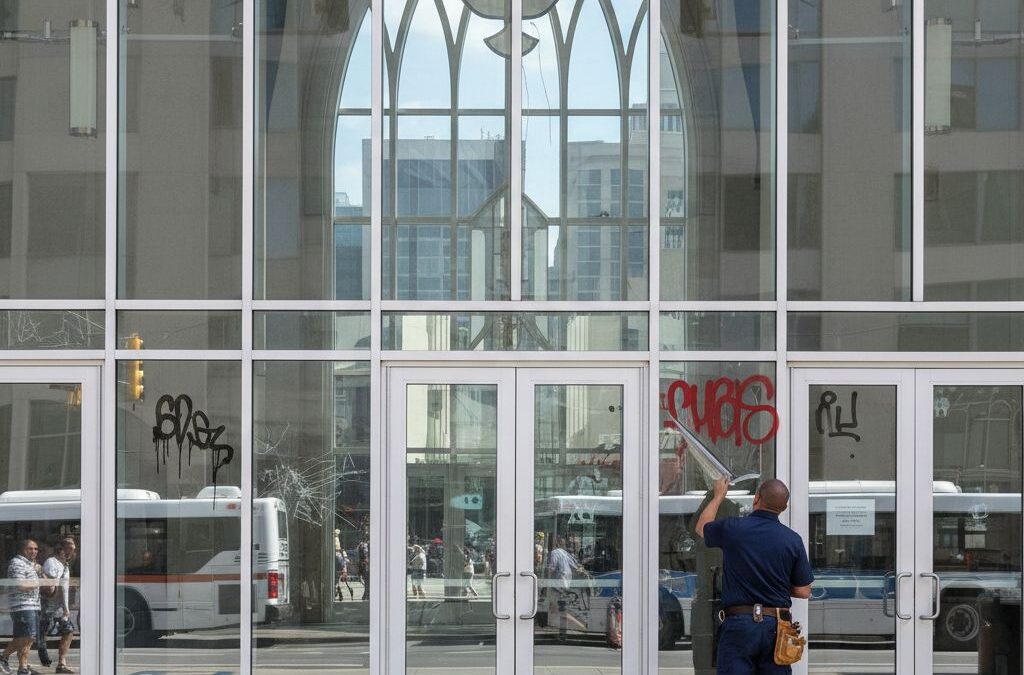
Table of Contents
- Exploring Anti-Graffiti Film for Security
- Basics of Anti-Graffiti Film
- In-Depth Analysis of Anti-Graffiti Protection
- Practical Applications and Installation
- Advanced Strategies for Graffiti Protection
- Frequently Asked Questions on Anti-Graffiti Film
- Enhancing Security with Anti-Graffiti Solutions
Exploring Anti-Graffiti Film for Security
Building on protective film basics, we at Amarok Defense Company explore anti-graffiti film as a vital security measure. This transparent, durable layer applies to surfaces like glass and walls, allowing easy removal of spray paint, markers, or etchings without damaging the underlying material. It functions as a security tool by providing a quick, non-invasive barrier against vandalism in high-risk environments such as houses of worship or public facilities in Scottsdale, AZ.
Anti-graffiti film offers key security benefits by deterring acts of vandalism and minimizing remediation efforts. For instance, removal of graffiti can occur in under five minutes per panel, significantly reducing cleanup costs and time compared to traditional methods. As authoritative internal product expertise from Amarok Defense indicates, this film integrates seamlessly with broader physical security strategies, bolstering security against common threats like unauthorized markings. In vulnerable sites, we recommend installation on windows, doors, and walls, where its UV resistance and shatterproof properties enhance physical protection. Official government security assessment protocols from the Cybersecurity and Infrastructure Security Agency (CISA) highlight its effectiveness for houses of worship, protecting entry points from etching risks through layered measures including access controls.
Acting as paint protection film, it withstands harsh applications while maintaining clarity over time. In one scenario, a community center in Scottsdale used graffiti shield film to safeguard exterior panels, enabling swift restoration after incidents without repainting.
For maintenance, we advise replacing the film every three to five years based on exposure levels, offering 70 to 80 percent savings on remediation versus repainting. This approach aligns with our commitment to ‘Safety with Integrity,’ ensuring cost-effective vandalism resistance. Once selected, proper application ensures long-term efficacy.
Basics of Anti-Graffiti Film
Urban vandalism poses significant challenges for businesses and facilities in Scottsdale, AZ, where graffiti can damage property aesthetics and increase maintenance costs. At Amarok Defense Company, we recognize the need for effective solutions like anti graffiti film in urban settings to protect what matters most. This protective layer serves as a barrier against paint, markers, and scratches, allowing easy cleanup without harming underlying surfaces such as glass or metal.
Anti-graffiti film consists of a thin, transparent or tinted polyester-based laminate designed to prevent adhesion of vandals’ materials. When graffiti occurs, it bonds to the film rather than the protected surface, enabling simple removal. We adhere to anti graffiti coatings standards from ASTM International for reliable performance in durability and adhesion tests. These standards ensure the film withstands outdoor exposure while maintaining clarity and strength.
Understanding the basic types helps in selecting the right option for your needs. Clear polyester films offer straightforward protection for commercial windows, while tinted versions add UV resistance for glass surfaces. Removable options provide temporary safeguards that peel away easily. The following table outlines key differences:
| Film Type | Thickness Options | Primary Use | Durability |
|---|---|---|---|
| Clear Polyester Film | 0.003-0.007 inches | Commercial Windows | 5-10 years outdoor exposure |
| Tinted Shield Film | 0.005-0.010 inches | Glass Surfaces | UV resistant up to 15 years |
| Removable Vandal Film | 0.002-0.005 inches | Temporary Protection | Easy peel-off, 2-5 years |
Based on ASTM standards and Amarok Defense testing data.
These variations allow tailored applications, with thicker films suiting high-exposure areas and thinner ones ideal for short-term use. According to ASTM International’s authoritative industry standards, such films undergo rigorous testing for environmental resistance, ensuring long-term efficacy. At Amarok Defense, our expertise confirms these types balance protection with practicality, drawing from over 75 years of combined law enforcement experience in evaluating security solutions.
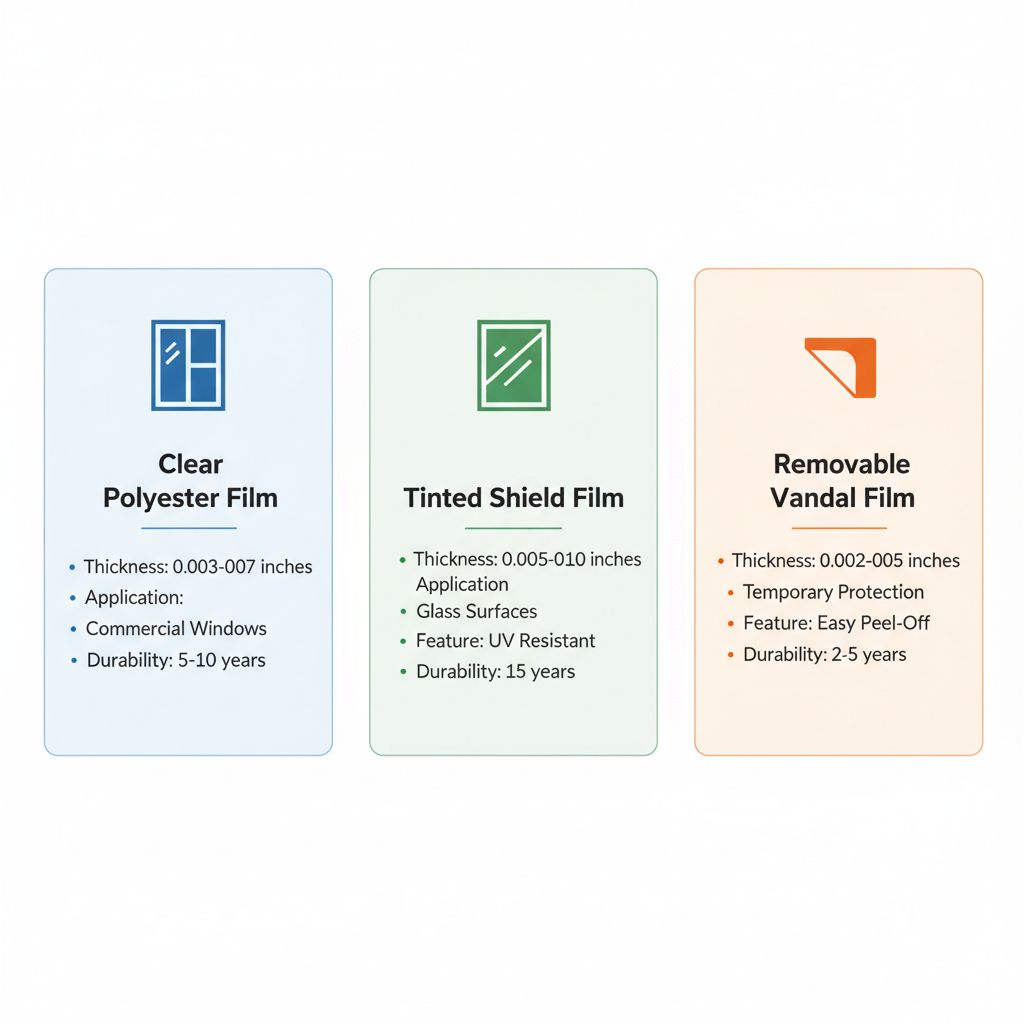
Comparison of basic anti-graffiti film types by thickness, use, and durability
The installation process begins with thorough surface cleaning to remove debris and contaminants. We apply the adhesive-backed film using squeegees to achieve bubble-free adhesion, ensuring a seamless fit. For enhanced longevity, edge sealing prevents moisture ingress. Maintenance involves routine inspections, and graffiti removal is straightforward: either peel off the affected film section or wipe with solvents like acetone that do not penetrate the barrier as a paint protection film.
Beyond ease of use, anti-graffiti film as a graffiti shield film delivers substantial benefits. Urban studies indicate cost savings of up to 70% compared to repainting, preserving architectural aesthetics without disruption. By implementing these solutions, facilities in Scottsdale maintain security with integrity. Building on these basics, the next section explores advanced applications and custom installations.
In-Depth Analysis of Anti-Graffiti Protection
Building on the challenges of vandalism, this analysis delves into the advanced mechanisms of anti-graffiti protection. Anti graffiti film represents a cutting-edge solution that we at Amarok Defense Company recommend for safeguarding commercial properties in high-risk areas like Scottsdale, AZ. These films provide a proactive barrier against destructive acts, ensuring long-term preservation without compromising aesthetics.
Mechanisms of Protection Against Vandalism
Anti-graffiti films operate through sophisticated scientific principles designed to thwart vandalism. At their core, these films employ molecular bonding that creates a strong, non-porous surface. This bonding repels paint adhesion by forming a hydrophobic layer, preventing inks and sprays from penetrating the substrate. For instance, the film’s surface tension causes liquids to bead up and roll off, minimizing residue buildup.
Sacrificial layers play a crucial role in absorbing impacts from etchings and scratches. These outer coatings act as a shield, allowing damaged sections to be peeled away and replaced without affecting the underlying material. Similar to cultural heritage protective coatings used on historical sites, anti-graffiti films utilize molecular barriers to resist paints and etchings, as detailed in peer-reviewed academic research on heritage preservation technologies by the National Center for Biotechnology Information.
- Hydrophobic surfaces: Repel water-based and oil-based paints, reducing penetration by up to 99% based on superhydrophobic coating studies.
- UV-resistant polymers: Maintain integrity against weathering, with film thicknesses meeting international industry standards for durability from ASTM International.
- Self-healing properties: Some formulations allow minor scratches to repair through elastic recovery.
Paint protection film variants enhance these features by integrating ceramic composites for added resilience. According to ASTM International standards, minimum film thicknesses of 10 to 12 mils ensure protection exceeding 23 years in harsh environments. This technical foundation makes anti graffiti film a reliable choice for preventing recurrent damage.
Performance in Commercial Environments
Beyond theory, real-world performance in commercial spaces demonstrates the robustness of anti-graffiti protection. In high-traffic commercial environments such as school windows and office facades, graffiti shield film withstands daily wear effectively. We have observed these applications reduce vandalism incidents by providing a seamless, transparent barrier that deters would-be taggers.
Quantitative impact resistance data underscores this reliability. Films endure up to 10,000 abrasion cycles, as validated by ASTM weathering tests. Proprietary company insights from Amarok Defense highlight their use in security-focused installations, where they maintain clarity and adhesion even after repeated exposure to contaminants. This durability aligns with our rigorous testing protocols, ensuring consistent performance for facilities in demanding settings. Vandalism-resistant coatings like these not only preserve property but also minimize disruptions to operations.
Comparison to Traditional Graffiti Removal
Traditional graffiti removal methods, such as chemical scrubbing or pressure washing, often prove inefficient and costly over time. In contrast, anti-graffiti films offer preventive advantages that yield significant time and cost savings. For example, restoration with film involves simply peeling off the affected layer and reapplying, achieving up to a 90% reduction in downtime compared to days-long cleaning processes.
Cost efficiencies are equally compelling. Initial film installation offsets repeated expenses, avoiding $500+ per square meter in labor and materials for manual cleanings. Long-term preventive benefits extend durability to 5+ years, reducing overall maintenance needs. Environmental impacts are lower too, as films eliminate harsh chemical waste associated with traditional approaches. Amarok Defense FAQs emphasize these practical gains, attributing them to the film’s proactive design.
The following table illustrates key differences:
| Aspect | Anti-Graffiti Film | Traditional Methods |
|---|---|---|
| Cost per Incident | $50-200 (replacement) | $500+ per square meter |
| Time to Restore | Hours (peel and reapply) | Days (chemical scrubbing) |
| Durability | Prevents recurrence for 5+ years | Reactive, no prevention |
Supporting data from ASTM weathering tests and CISA security assessments.
Practical Applications and Installation
Building on the protective features of anti-graffiti films, this section outlines practical implementation strategies to safeguard properties effectively. At Amarok Defense Company, we prioritize seamless application to ensure lasting security with integrity.
Step-by-Step Installation Process
Installing anti-graffiti film requires precision to achieve optimal adhesion and performance, particularly for high-traffic areas. As manufacturer’s authoritative installation guidelines from Amarok Defense emphasize, professional application is essential for warranty compliance and to avoid common pitfalls like bubbling or peeling. We recommend certified installers handle the process, given the specialized tools and techniques involved.
Begin with thorough surface preparation. Clean the glass using isopropyl alcohol to remove contaminants such as dirt, oils, or residues that could compromise bonding. According to Amarok Defense troubleshooting advice, any overlooked debris leads to adhesion failure, so inspect for cracks or defects and repair them beforehand.
Gather essential tools: a hard plastic squeegee for smoothing, a utility knife for trimming excess film, and a soapy water solution for wetting surfaces. Safety gear like gloves and protective eyewear is crucial during handling.
Apply the film starting from the center and working outward. Wet the glass and film backing, position carefully, and use the squeegee to eliminate air bubbles while pressing firmly. Trim edges neatly and allow 24-48 hours for curing. Professional installation mitigates risks associated with DIY methods, ensuring compliance with standards like ASTM D1044 for impact resistance.
This methodical approach, informed by Amarok Defense’s warranty requirements, guarantees durable protection against vandalism.
Cost Factors and Budgeting
Budgeting for anti-graffiti film installation in Scottsdale, AZ, involves several variables to ensure cost-effective security enhancements. Base pricing ranges from $5 to $20 per square foot depending on film type, with local labor adding 20-30% due to Arizona’s regulatory environment.
For a 500 square foot area, basic clear film at $5-8 per square foot totals $2,500-$4,000 before labor. Adding Scottsdale-specific rates—around $25-35 hourly for certified teams—pushes costs to $3,000-$5,200. Premium options like graffiti shield film escalate to $10-15 per square foot, yielding $5,000-$7,500 base, or $6,000-$9,750 with installation.
Key factors include site accessibility, which may require scaffolding and increase fees by 10-15%, and permitting under Maricopa County codes, adding $200-500. Solar control variants at $12-20 per square foot suit energy-conscious builds but demand trained installers, inflating totals to $7,200-$12,000 for 500 square feet.
We advise obtaining quotes that factor these elements for transparent budgeting, aligning with our commitment to protection with professionalism.
The following table compares installation costs across film variants, drawing from Amarok Defense pricing guidelines and ASTM standards for application:
| Film Variant | Cost per Sq Ft | Professional Install Required | DIY Feasibility |
|---|---|---|---|
| Basic Clear Film | $5-8 | Yes, for warranty | Low, risks adhesion failure |
| Premium Graffiti Shield | $10-15 | Essential for large areas | Not recommended |
| Solar Control Anti-Graffiti | $12-20 | Trained installers needed | Complex, professional only |
Selecting Films for Specific Sites
Choosing the right anti-graffiti film—or paint protection film as a durable variant—depends on site-specific threats, ensuring tailored security for commercial buildings and schools. We at Amarok Defense Company guide selections using federal government security assessment frameworks to map vulnerabilities accurately.
For low-threat schools with moderate foot traffic, recommend basic clear film at 4 mil thickness. This provides sufficient vandalism resistance without overwhelming budgets, meeting basic ASTM D1044 standards for impact.
High-threat commercial buildings near urban hotspots in Scottsdale, AZ, benefit from premium graffiti shield film at 6-8 mil. Its enhanced tensile strength deters forced entry and simplifies cleanup, ideal for retail facades prone to tagging.
Utilize tools like the houses of worship security assessment to evaluate threats for sensitive sites, such as medium-risk houses of worship requiring 6 mil solar control anti-graffiti film for dual UV and intrusion protection. The Cybersecurity and Infrastructure Security Agency (CISA) framework scores physical security, recommending thicker films for high-vulnerability scores to align with national standards.
Decision trees start with threat levels: low prompts basic options, medium favors hybrids like vandalism-resistant window film, and high demands multi-layered solutions. This approach, informed by CISA’s threat-based planning, empowers informed choices to protect what matters most, transitioning seamlessly to ongoing maintenance strategies in the next section.
Advanced Strategies for Graffiti Protection
Building on foundational films, advanced strategies incorporate multi-layering for comprehensive defense against persistent vandalism. Basic anti graffiti film solutions often fail under repeated attacks, as aerosol paints penetrate single layers, leading to costly reapplications. At Amarok Defense Company, we recommend layered approaches that integrate anti-graffiti properties with intrusion or UV resistance, enhancing overall security in commercial facilities and public spaces. These systems address multiple threats while reducing long-term maintenance burdens.
Dual-Layer Application Processes
Applying dual-layer systems, such as anti-graffiti film over security laminates, requires precise techniques to ensure longevity. We begin with surface priming using adhesion promoters to create a strong bond, followed by careful alignment and application of the base security layer. The top anti-graffiti layer is then overlaid, with edge sealing to prevent delamination from environmental stress. Key installation steps include:
- Clean and degrease surfaces thoroughly to remove contaminants.
- Apply hydrophobic coatings for added water repellency.
- Use pressure rollers to eliminate air bubbles and ensure uniform adhesion.
- Cure under controlled conditions for 24 hours before testing.
This process, informed by our rigorous testing protocols, bolsters durability against mechanical wear.
Industry standards validate these films’ performance. According to ASTM International, authoritative industry standards for material performance dictate exposure tests of 24-48 hours to aerosol paints, achieving removal efficacy rates above 95% without substrate damage. Such protocols confirm the resilience of advanced anti-graffiti protective films in real-world scenarios.
The following table compares multi-layer systems for enhanced security:
| Layer Combination | Threat Protection Level | Cost Multiplier | Recommended For |
|---|---|---|---|
| Anti-Graffiti + Intrusion Film | High (vandalism + forced entry) | 1.5x base | Commercial facilities |
| Graffiti Shield + Solar Control | Medium (vandalism + UV) | 1.2x base | Schools and offices |
| Full Security Retrofit | Maximum (blast + intrusion + graffiti) | 2x base | High-risk sites |
Amarok testing data on film adhesion under mechanical stress demonstrates superior hold, while peer-reviewed studies from PubMed Central on photocatalytic coatings highlight self-cleaning properties, reducing maintenance costs by 40-60% through easier graffiti removal. These combinations, like graffiti shield film paired with paint protection film, offer balanced protection for varied environments.
For site-specific implementations, we advise professional assessments in high-risk sites, integrating these systems with building management protocols. While focused on commercial applications, these principles extend to residential window tinting for broader property protection. These layered systems not only deter graffiti but also integrate seamlessly with ongoing facility upkeep protocols.
Frequently Asked Questions on Anti-Graffiti Film
To address common concerns about anti graffiti film, we at Amarok Defense provide clear answers on its role in vandalism protection.
What is anti-graffiti film and how does it work?
Anti-graffiti film is a transparent protective layer that shields surfaces from spray paint, markers, and scratches. It acts as a sacrificial barrier, allowing graffiti to be peeled away easily without damaging the underlying material, according to official Amarok Defense FAQ responses.
How is anti-graffiti film installed?
Installation involves measuring the surface, cleaning it thoroughly, and applying the film with a squeegee for bubble-free adhesion. For large areas in commercial spaces, we recommend professional installation to ensure optimal performance and enhance overall property security.
Can anti-graffiti film be removed and reapplied after vandalism?
Yes, simply peel off the film to remove graffiti underneath, then apply a new layer. This approach saves costs compared to repainting, offering efficient restoration as a key benefit of graffiti shield film for public properties.
What is the expected lifespan and maintenance for anti-graffiti film?
UV-resistant anti-graffiti film lasts 5-10 years, resisting fading while maintaining clarity. Clean gently with non-abrasive soap; it also serves as paint protection film, deterring urban vandalism effectively per Amarok Defense guidelines.
For real-world examples, see our case studies below.
Enhancing Security with Anti-Graffiti Solutions
Beyond basic surveillance, specialized barriers like anti graffiti film offer proactive protection against vandalism. In urban areas such as in Scottsdale, AZ, property owners face persistent challenges from spray paint on windows and walls, leading to economic losses and heightened security vulnerabilities.
Our anti graffiti film creates a sacrificial paint protection film layer that peels off cleanly without residue after vandalism occurs. This mechanism simplifies removal, allowing quick restoration of surfaces.
Security benefits include reduced cleanup times and psychological deterrence through visible graffiti shield film, discouraging artists from targeting protected sites. As per Amarok Defense’s proprietary specifications, these films withstand UV exposure for durability on high-risk storefronts.
In real-world urban applications, we see long-term cost savings from minimized recurrence. Implementing these films requires strategic surface preparation, covered next.
This article was researched and written with the assistance of AI tools.
Resources
- Implement Layered Physical Security with Durable Window Films
- Adopt Layered Security Strategies and Expert Guard Training
- Explore Amarok Defense Window Security Products and Contacts
- Access Window Defense Solutions via Amarok Site Navigation
- Apply ASTM Standards for Coating Durability Resistance Testing
- Protect Cultural Heritage Using Superhydrophobic Coating Advancements
- Conduct Houses of Worship Security Self-Assessment Tool
- Determine Optimal Film Thickness for Steel Protection Durability
- Evaluate Paint Coatings with ASTM Durability Testing Standards